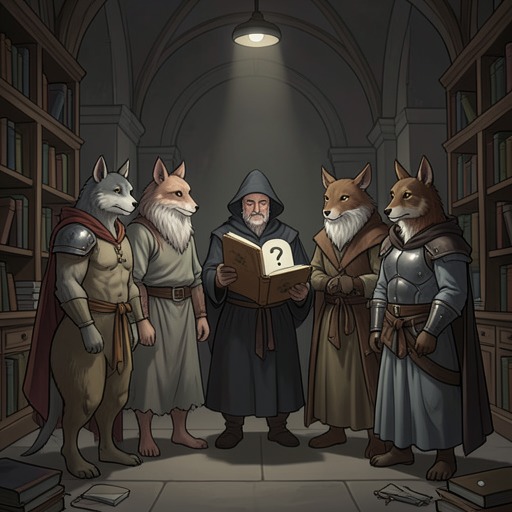
Burdock Muldoon’s Two-Legged Classification and Summit
Fantastic Beasts and Where to Find ThemBurdock Muldoon’s Two-Legged Classification and Summit was an early, failed effort to give magical creatures a place in wizard government. In the fourteenth century, Muldoon, Chief of the Wizards’ Council, made bipedalism the test of legal personhood and invited the creatures who passed it to discuss magical laws with wizards. The summit’s failure showed that a category imposed by officials could not, by itself, create political membership or a desire to share authority.
Background: Defining a “Being”
The episode belongs to a longer dispute over which magical creatures should count as “beings”—creatures worthy of legal rights and a voice in the governance of the magical world—and which should remain “beasts.” The question was not simply how a creature looked or whether it possessed unusual abilities. It concerned who could claim standing in wizard society and take part in decisions about its laws.
Early attempts to draw that boundary were crude. As Chief of the Wizards’ Council in the fourteenth century, Muldoon decreed that any member of the magical community who walked on two legs would be granted the status of “being”; everyone else would remain a “beast.” The rule substituted an observable bodily trait for the more difficult questions of intelligence, political interest, and self-identification. Its apparent simplicity became its weakness: it could sort creatures into official categories without establishing what they wanted from the government doing the sorting.
The Classification and Summit
In a spirit of friendship, Muldoon summoned all those he had designated “beings” to meet with wizards at a summit to discuss new magical laws. The invitation treated classification as a bridge to consultation: once included in the category, these creatures were expected to join the deliberation. But the gathering made plain that eligibility under a wizard-made rule did not amount to consent, common purpose, or even interest in wizard affairs.
The summit therefore failed as a political project, not merely as a classification exercise. Muldoon had assumed that two-legged creatures could be assembled into a willing body of participants. The distinction between being counted and choosing to take part ran through the episode: a creature’s place in an administrative definition could not compel it to enter the political relationship the definition was meant to enable.
From Failure to Later Definitions
The account draws an explicit lesson from Muldoon’s attempt: possessing two legs was no guarantee that a magical creature could or would take an interest in the affairs of wizard government. Embittered by the outcome, Muldoon forswore further attempts to integrate non-wizard members of the magical community into the Wizards’ Council. The summit thus ended not with a new partnership, but with the organizer’s retreat from integration.
Later efforts changed the test rather than treating Muldoon’s bodily criterion as sufficient. His successor, Madame Elfrida Clagg, tried to redefine “beings” in the hope of creating closer ties with other magical creatures. Not until 1811 did Grogan Stump, the newly appointed Minister for Magic, decree a definition that most of the magical community found acceptable. Those later measures belong to a broader history of contested membership; they underscore how far the early summit was from resolving the question it had set out to address.
Political Significance
Muldoon’s episode exposes the limits of classification as a substitute for representation. Calling a creature a “being” could confer an official standing, but the label did not ensure that the creature wished to deliberate with wizards, accept their institutions, or be represented on their terms. The summit’s failure makes that distinction concrete: recognition assigned from above was not the same as political participation freely taken up.
The episode also foreshadows a recurring tension in magical governance between institutional categories and communities’ own preferences about association and self-rule. Later, centaurs objected to sharing “being” status with creatures such as hags and vampires and declared that they would manage their affairs separately from wizards. Their position clarifies what Muldoon’s test left out: a group’s claim to autonomy cannot be reduced to whether its members meet a physical definition devised by the governing body. The failed summit remains an early example of that mismatch between official inclusion and the willingness—or right—to govern oneself.